Feeds:
Posts
Comments

Archive for the ‘Photojournalism’ Category

Photographers. We like to shoot and flash people.

With our cameras.

Sorry, I just had to throw that one out there!

Anyway. Our latest assignment for Advanced Techniques in Photojournalism was to use a single flash to overpower the existing light in our photo. We were to do this in two different takes:

  1. Bounce flash — This could be either on or off the camera.
  2. Direct flash — This had to be off-camera, meaning a shoe cord would be necessary.

I’ve done some flash work before, so I wasn’t as uncomfortable with this assignment as I was in the studio for our classmate portraits. Although I’d never used guide numbers and formulas to calculate how I should power up my strobe, I’ve done work with both manual and TTL flashes before. When I worked at Philmont Scout Ranch in 2006, the photo department was still using film (Pentax 6×7’s — what glorious old beasts!), which we developed and then printed ourselves. So of course any strobe work we did was completely manual, and I’m still very proud of a few exposures I made wherein you can determine that a strobe was used only by a few small shadows.

Most recently, I photo’ed senior portraits of my friend Chelsea’s brother Zak. In preparation for this shoot, I photo’ed Chelsea herself and was really pleased with how the below image came out, what with the sunlight acting as a hairlight and the flash acting as the main light source:

But for this class assignment, we couldn’t set anything up. So for my first take — in which I used the strobe as a direct flash — I went to open mic at Mojo’s on Monday. Here’s my select shot from that take:

Sam DAgostino and his daughter Anna perform together during open mic at Mojos on Monday. DAgostino - who used to manage Mojos and The Blue Fugue - and his family often play music in a group they call Pop Fiction.

Sam D'Agostino and his daughter Anna perform together during open mic at Mojo's on Monday. D'Agostino - who used to manage Mojo's and The Blue Fugue - and his family often play music in a group they call "Pop Fiction."

I had a really hard time with the direct flash take. All my images of the first few performers at the open mic section were coming out terribly, as if they were taken with a dinky point-and-shoot camera and not a DSLR and off-camera flash… that is, everything was overblown and just awful. Awful, awful, awful.

Plus, I was using my flash on manual mode, not TTL. Before I even began the class, my good friend Esten told me always to shoot on manual. I said I would only if I wasn’t under pressure, at least not until I became more comfortable with strobe work.

Well, I changed my mind. When former Maneater photo editor Ryan Gladstone and I shot the Missouri-Kansas mens basketball game in Lawrence, Kan., in January 2007, he asked me what mode I was using to shoot. I said I was shooting on aperture-priority, at which he shook his head and advised me to always shoot on manual. I said I would start trying that after the game. And I did. And I grew to like having complete control over my exposures, and now I can’t shoot any other way.

(more…)

Read Full Post »

I am blogging live as a volunteer at Pictures of the Year International, an international contest to which photographers send submissions in dozens of categories. Currently, the three judges are going through the final cut of the multimedia feature story category. At any point, you can click here to watch/listen the judging live.

I’ve also sat through the judging of science/natural history and science/natural history picture story. It seems that every year, I miss the judging of the sports categories — every year, for POYi and CPOY — because it’s always the first overall category to be judged.

POYi and CPOY always renew an interesting discussion among my photojournalism friends: the extent of post-shooting editing. I’m not going to single any photographers or images out, but the winning entries are more often than not the most heavily edited. Photoshop-induced vignetting, heavy levels clipping, massive amounts of over/undersaturation… those seem to be the overarching trends.

(more…)

Read Full Post »

The hours between 8:30 and 11 a.m. constituted the single most productive Sunday morning I’ve had since last summer at Philmont. Laura and I were partnered up for the class Metal & Glass assignment, wherein

You are paired up so that one can grip for or assist the other and visa versa [sic]. One of you is to photograph glass or translucent objects and the other will photography [sic] metal objects. When you are not the shooter, you are to be the assistant, which means the second set of eyes and hands on the shoot. (Syllabus)

I shot glass; Laura shot metal. Check her blog later to see her shots of the coins we donated and the piggy bank we destroyed!

For my shot, I bought six vases at Michael’s and used paintbrushes and dipping pens that I already own. (I knew I didn’t bring them from Texas for nothing!) We put in a few drops of food coloring into the vases without brushes or pens, at the last minute so that you can still see the coloring mix into the water.

I ended up with a two-light setup. Even though I checked all the settings between the light meter and my camera and am pretty sure I metered correctly, all my shots were underexposed when I imported them to my computer. Lesson learned: I should have bracketed. Oh well.

Here’s my select image, untouched by Photoshop except to eliminate some spots on the sensor and to sharpen the image overall:

Pretty underexposed, yes? I will definitely be bracketing next time.

For kicks and giggles, I toned my select image and the runner-up to look the way they should have:

The toned select.

The toned select.

The toned runner-up.

The toned runner-up.

(more…)

Read Full Post »

For our second assignment in Advanced Techniques in Photojournalism, we shot portraits of a classmate in the studio. This was my first time configuring lights with a subject in a studio environment, and I must admit that I didn’t really enjoy it.

By no means was that my partner Calin‘s fault. Calin was a great partner — very patient and, even though he’d also never done studio work before, more knowledgeable about how to set up the lights according to the desired light ratio.

But before I delve more into why I didn’t enjoy the studio as much as I’d anticipated, here are the final three selects, of the 103 that I shot over two days.

Calin Ilea playfully swipes his hand across his face to the tune of imaginary music. Ilea, a graduate student from Romania, enjoys playing soccer in his free time. [Friday, Feb. 13]

Calin Ilea playfully swipes his hand across his face to the tune of imaginary music. Ilea, a graduate student from Romania, enjoys playing soccer in his free time. Friday, Feb. 13.

Ilea also enjoys the combination of pickles and mayonnaise, at least according to his friend and TA Catalin Abagiu. [Friday, Feb. 13]

Ilea also enjoys the combination of pickles and mayonnaise, at least according to his friend and TA Catalin Abagiu. Friday, Feb. 13.

Ilea sprawls out on the floor after nearly five hours in the studio on the second day of shooting. Ilea had already had a rough day before starting work in the studio at 9 p.m. [Tuesday, Feb. 17 -- but, technically, Wednesday, Feb. 18]]

Ilea sprawls out on the floor after nearly five hours in the studio on the second day of shooting. Ilea had already had a rough day before starting work in the studio at 9 p.m. Tuesday, Feb. 17 -- but, technically, Wednesday, Feb. 18.

(more…)

Read Full Post »

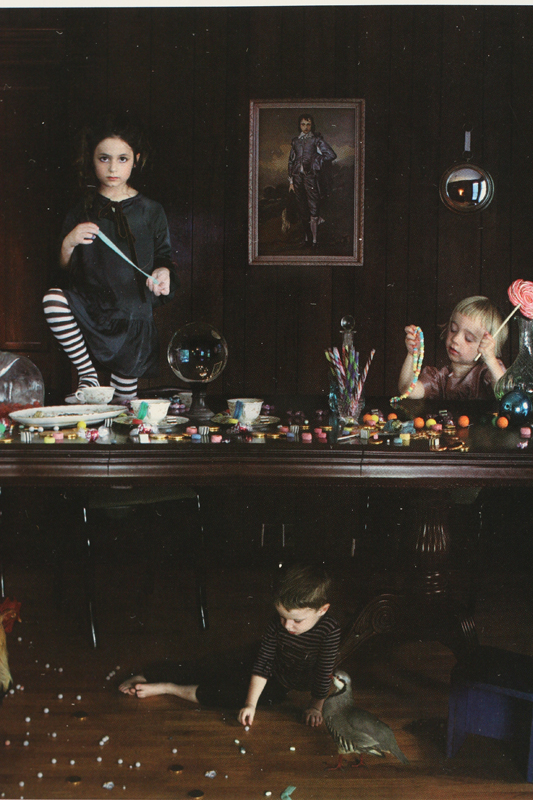
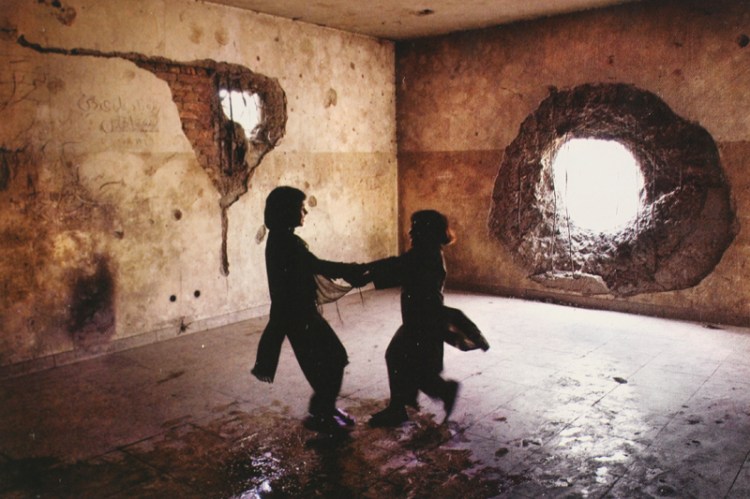
For my Advanced Techniques in Photojournalism class, we were to photograph two types of images: one whose lighting configuration we couldn’t figure out easily and one whose lighting enhanced the image’s overall mood.

I found these two images in Fall 2008 issue of PDNedu.

This is a vertical crop of a horizontal photo. I cropped it in-camera. Not sure why I chose to do that. It appears that a softbox was aimed at each child’s head — but I can’t figure out exactly how.

09-0203-ct-dunnc-lr-0001

This photo is of two children playing in a wrecked building in Kabul. It was photographed by Lana Slezic, and is the photo I chose for its lighting and its impact on mood.

09-0203-ct-dunnc-lr-0004

Read Full Post »

As of this week, I have entered a strange place in my life/mental state. That is, I’ve begun to question exactly what I’m doing in journalism.

It all started when I had to present my goals for this semester to my editor Phill Brooks, as a component of my Advanced Reporting class. After discussing my goals with him, I was to e-mail him and my class instructor a memo recapping the discussion.

Initially, my goals were enterprise, in-depth analysis and connecting with the reader — all of which I’d outlined in a previous blog entry. But when I told Phill, he laughed and said my real goal should be figuring why I am still working — and with gusto — in the bureau when, as a photojournalism major, this class is not a required component for acquiring my degree.

The following is the memo I sent to Phill and my instructor last night.

(more…)

Read Full Post »

[Psst — here’s my professional resume as of Jan. 31, 2009!]

Everyone knows the journalism job market is exponentially shrinking.

I’ve known this since high school, when it was time to begin applying to colleges and my mother realized just how serious I was about pursuing journalism. She wanted me to look at in-state colleges with communication schools or journalism departments, but I refused to consider them seriously.

Shortly after I told her I wouldn’t go anywhere but the University of Missouri-Columbia, I found a newspaper clipping next to my dinner plate. It basically detailed how the journalism job market was beginning its downslide, and how internships are a must for anyone interested in pursuing journalism as a career.

My mother later asked if I’d found and read the clip, and if I was still thinking clearly about my future. She then informed me that, following my graduation from the higher education sector, she would not be financially responsible for me nor allow me to live in the house.

So, thanks to my encouraging and ever-supportive mother, I have long been aware of a) the job market, b) the importance of an internship and c) how I really need to get a job after college.

Thus far, I have applied to more than two dozen internships.  (more…)

Read Full Post »

In my post earlier today, I mentioned a Twitter discussion about photojournalism, as well as a Politico article about how the Obama administration is treating the press corps. From there, I read up more on Pete Souza, whom the Obama administration has hired as the chief White House photographer.

First, I read PDN’s Jan. 5 article introducing Souza as the chief photographer. After reading the first few sentences, I began to wonder about the nature of the job… especially since Souza was the only photographer present at Obama’s retaking his oath of office (an event at which no other cameras, including television cameras, were allowed).

So, I posted the following two-part update on my Twitter:

Reading about White House photog Pete Souza. Pondering: if I were offered the job of White House photog, would I accept?

Mainly, would any journalism outlet hire me as a photographer after having been basically the PR photog for the White House?

This began the following conversations:

Joel: yes, they probably would. look at Souza, he worked for as WH photog under Reagan then went to the Chicago Trib. the WH photog is more than a PR photographer, sure there’s lots of grip and grins, but you’re documenting history

Me: Truth, about Souza and the job’s being more than PR. But still, not much enterprise/reporting involved (obviously). Hired photogs/press secretaries can find jobs in journ afterward (example: Stephanopoulous), but still – something to think about.

Joel: if anything it would give you a more intimate understanding of the subject that you were covering. the enterprising aspect comes in finding new ways to photograph your subject

Me: Re: intimate understanding – True, but I wouldn’t hire Souza to cover the White House/D.C. after Obama’s administration.

Joel: true, maybe not the very next administration, but possibly subsequent ones

Me: I agree on that point. But re: enterprise – much of the value of that comes from finding the stories, not being taken to an event.

Joel: thats the reporter in you talking, i’m speaking from purely a photographic standpoint you have ultimate access to be creative

Me: Ultimate access is def a plus of the job, can’t argue with that. But yeah, I’m def speaking as a reporter/journalist.

Jeff (also directed at Joel): But after a high-paying PR job with benefits and name recognition why bother going back to journalism?

Joel: i would, unless offered another similar job someplace else. or i’d teach, like Souza did

Me: Because journalism is more satisfying/fulfilling on a personal level then [sic] PR? For some people, anyway. At least, for me.

Jeff: Oh I know. That was mostly sarcasm.

Kevin: You’re crazy to waver. Essentially the best photo-j assignment ever, job that’ll be there in 4 yrs (unlike journalism outlet).

Me: But there’s no journalism involved. You’re an event photographer. The job’s only journalistic value lies in recording history. Whereas journalism implies some degree of original enterprise, WH photog just gets assigned events/handshaking PR jobs.

Adam (also directed at Kevin): By no means do I think Sousa is going to shoot only grip-and-grins—he wouldn’t have taken the job if that was true.

Me: Truth. Still. While the job entails a lot of pressure dare I say it nevertheless seems too easy? Maybe I’m actually jealous

Adam: Yeah, maybe that’s it. (Me too.) q :

I later found another PDN article — published in late October — in which four former White House photographers reflected on their experiences and shared their perceptions and observations of the job. It’s worth mentioning that Pete Souza is the first photographer in the article.

The article is definitely worth reading, and clarified a few points of concern for me, especially with regard to the line the White House photographer treads between being a PR photographer and a photojournalist. I almost wish I’d read it before tweeting my concerns about the perhaps not-so-journalistic nature of the White House photographer’s job, but no regrets. It was a good Twitter conversation with good Tweeple.

P.S. — I posted three entries today. This kind of frequency will not be a regular thing on this blog.

Read Full Post »

I’d known about Twitter for quite some time, but didn’t join until Oct. 2008 when my good friend Stephen finally roped me into it. I’ve since been following — and am followed by — a number of Tweeple in the journalism industry. I occasionally follow the weekly Monday #journchat discussions, but today was the first day I tweeted heavily with others about the field.

It all started when I read and tweeted Politico’s article about the Obama administration and its treatment of the press corps. On the first page of the article, you can find these two grafs:

“It is ironic, the same day that the president is talking about transparency, we were not let in,” CNN’s Ed Henry said on the air Wednesday night after news of the second swearing-in broke.

Henry’s main gripe was that television reporters weren’t permitted to cover a historic moment, when Obama once again raised his right hand and took the oath before Justice John Roberts. The only images came from White House photographer Pete Souza.

As a photojournalism student, I understand but dislike media restrictions. During the 2008 campaign season, I covered political rallies at which Barack Obama, Hillary Clinton, John McCain, Sarah Palin, John Edwards and Mitt Romney were present. As the election season came down to the wire and larger venues were used to accommodate larger crowds, the media restrictions became pretty tight.

In January and February (Super Tuesday!), fellow student photographers and I had easy access and the freedom to roam about two Hillary Clinton rallies, a Barack Obama rally, a John Edwards rally, a John McCain rally and a Mitt Romney rally — all in the St. Louis area. At one Clinton rally, I was so close that I was right up against the railing blocking the general public from the main stage, and had the opportunity to shake Bill Clinton’s hand afterward. (I didn’t. I probably should have.)

In the fall, access became highly restricted, and understandably so. Obama held a rally at MU the week before the election, and only national/traveling press photographers were allowed into the “pit” area (the section cordoned off right in front of the stage — 10 feet away from the speaker, and obviously the best place from which to take photos).

Palin held a rally on the State Capitol building steps in Jefferson City the day before the election — and, once again, only national/traveling press photographers were allowed into the pit. (Somehow, Secret Service detail allowed me into the pit for her entrance, Hank Williams Jr.’s performances and the first 10 minutes of her speech — but that access was definitely an unexpected surprise.)

I certainly understand why such access was restricted to the national/traveling press. They’re the ones with the big audience, whose photos will be splashed across national publications and highly trafficked news Web sites. But at the same time, connecting with the local press is important, too.

(more…)

Read Full Post »

Hello, all! I am still fairly new to WordPress, but am excited about using yet another social Web site. My name is Chris Dunn, and I am currently a photojournalism student at the University of Missouri. I fell in love with journalism when I was 10 years old, and have since seized every opportunity possible to become a better journalist.

I am starting this blog as a component of two of my classes at MU: Advanced Reporting and Advanced Techniques in Photojournalism. As such, this blog will include various assignments from both classes.

Elsewhere on the Internet, you can find me at the following:

I’m also working on getting my own Web site up, but that may take a little more time. I look forward to blogging some more!

Read Full Post »

« Newer Posts